

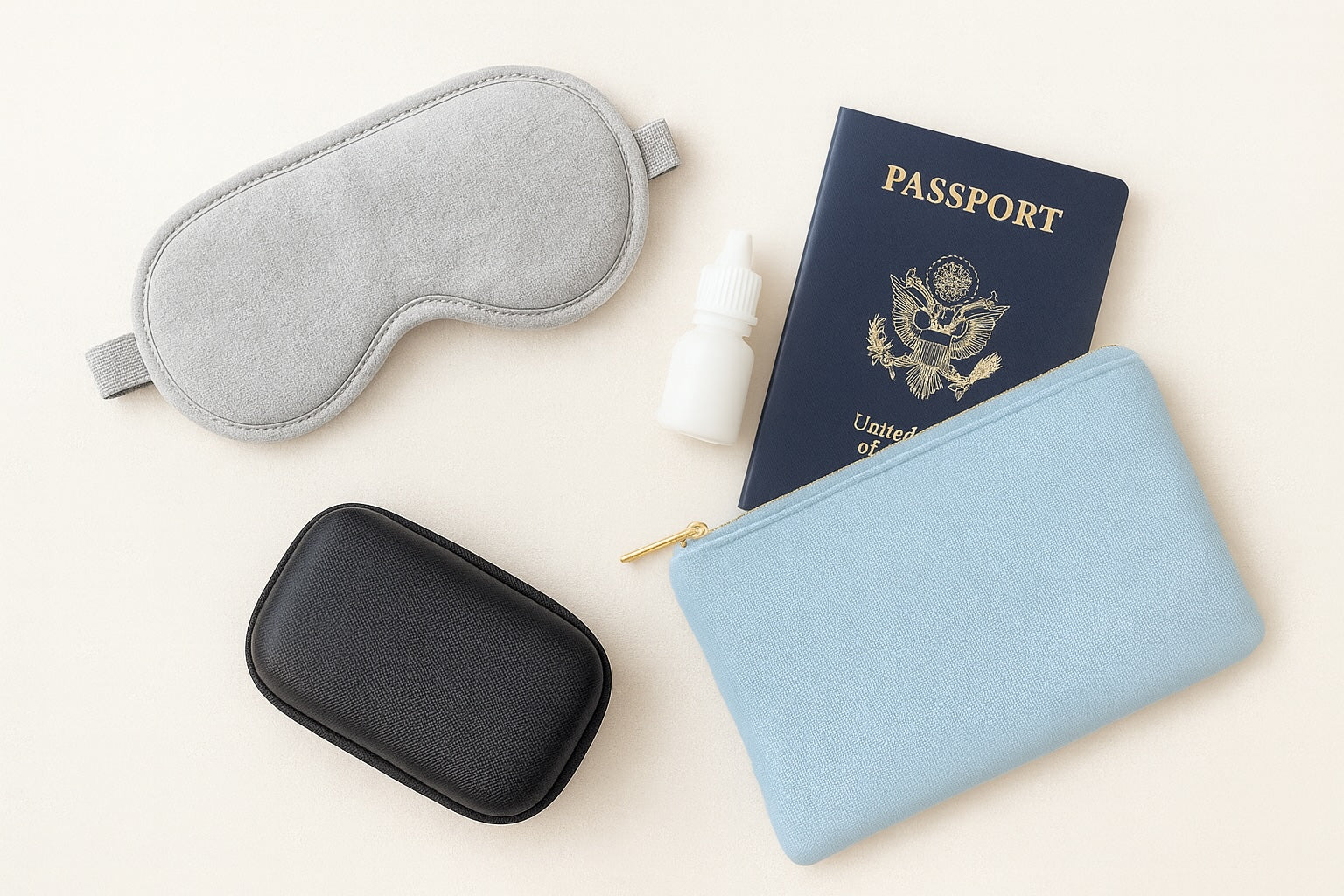
If you suffer from dry eye disease, traveling can feel daunting. Between dry airplane cabins, increased screen time and disrupted routines, your eyes can quickly become uncomfortable.
With the right strategies and some planning, you can significantly reduce dry eye symptoms while traveling—whether it’s a quick weekend getaway or a long-haul international flight.
Here’s everything you need to know about how traveling can exacerbate dry eye, and how you can optimize ocular comfort while traveling.
Why Travel Makes Dry Eye Worse
Dry eye occurs when your eyes don’t produce enough tears or when your tears evaporate too quickly. In the majority of patients, premature evaporation is caused by poor function of the meibomian (oil) glands located in the eyelids, a condition known as meibomian gland dysfunction (MGD) (1). Without adequate tear volume or a healthy oil layer, the tear film becomes unstable, leading to chronic inflammation and irritation of the eye surface that gradually worsens over time.
Travel environments often create the perfect storm for worsening symptoms of dry eye disease like burning or stinging eyes, redness, intermittently blurred or cloudy vision, grittiness, and foreign body sensation. Several factors contribute to this:
1. Extremely Dry Air (Especially on Airplanes)
Airplane cabins have humidity levels as low as 10–20%, compared to the normal indoor level of around 40–60% (4). This extremely dry air causes accelerated tear evaporation. If you already have meibomian gland dysfunction (MGD), your symptoms can feel even more profound.
2. Extended Screen Time
Whether you’re navigating maps, playing games on your smartphone, watching movies, or working on a laptop, travel typically increases screen exposure. As we know, screen use leads to decreased and incomplete blinking, which further destabilizes the tear film, resulting in worsened symptoms during your travels (3).
3. Disrupted Routine
At home, many dry eye sufferers rely on routines with treatments such as: instillation of artificial tears, regular use of warm compresses, scheduled use of prescription eye drops and omega-3 supplements. When travel disrupts your normal schedule, dry eye care is often affected.
4. Change in Climate
Traveling to a different climate can significantly aggravate dry eye symptoms, especially for individuals already prone to dry eye disease. Changes in humidity, temperature, and air quality can disrupt the delicate balance of the tear film, leading to increased tear evaporation and ocular surface irritation. Dry, cold climates and hot, arid environments both reduce moisture in the air, while windy conditions can further accelerate tear evaporation. For people with underlying MGD, environmental stressors may trigger flare-ups, making symptoms more noticeable and persistent during and after travel.
Common Dry Eye Symptoms That May Flare During Travel
While traveling, people with dry eye disease may notice a sudden increase in symptoms that were previously well controlled. Common travel-related flare symptoms include burning or stinging, redness, fluctuating or blurry vision, light sensitivity, excessive tearing (reflex tearing), and a gritty or foreign body sensation. These symptoms often worsen by the end of the day or after flights, long drives, or extended screen use.
Essential Travel Tips for Dry Eye Sufferers
The good news is that small, intentional changes can make a big difference. Here are some tips to optimize ocular comfort during travel:
1. Pack Your Dry Eye Essentials in Your Carry-On
Never put your dry eye treatments in your checked luggage. Have these items accessible in your carry-on or personal bag for easy access: Preservative-free artificial tears, soothing eye ointment or viscous gel drops for overnight use, warm compress eye mask (microwavable for use at your destination, and/or a self-heating mask for use on a plane/train etc.), any prescription drops you may need to use, your omega-3 supplements, eyelid wipes and/or eyelid cleansers.
This ensures that if your eyes become uncomfortable mid-flight or during transit, you’ll have immediate relief available. It also ensures that if the airline loses your luggage, you don't lose your whole routine/relief!
2. Use Artificial Tears Before Symptoms Start
Many people wait until their eyes feel uncomfortable to use eye drops—but prevention works better than reactive treatment.
Use lubricating drops:
-
Before boarding a flight
-
Every few hours while traveling
-
After extended screen use
-
Before going to sleep
Aim for preservative-free formulations, especially if you will be using them frequently throughout the day. Even if you normally use a regular, preserved drop while not traveling, you will likely need more frequent drop application during travels so going preservative-free is ideal in this scenario.
3. Stay Hydrated
Hydration plays a direct role in tear production and ocular surface health. During travel:
-
Carry a reusable water bottle
-
Skip excessive alcohol or caffeine (they can worsen dehydration)
-
Drink water consistently throughout your journey
4. Protect Your Eyes from Airflow
Direct airflow is a major contributor to tear evaporation. When traveling, try to:
-
Turn off overhead air vents on planes
-
Close vents in hotel rooms or cars when possible
-
Avoid sitting directly in front of fans or heaters
If you can’t avoid airflow, consider wearing wraparound glasses or sunglasses for added protection.
5. Bring a Humidifier (When Possible)
Hotels often have very dry air. A portable travel humidifier can significantly help maintain moisture in your environment overnight.
If you can’t bring a humidifier, you can:
-
Hang a damp towel near the bed
-
Place a bowl of water near a heat source
-
Take a warm shower before bed to increase bathroom humidity
These small changes can improve overnight eye comfort.
6. Continue Warm Compress Therapy
Don’t abandon your meibomian gland care just because you’re away. Warm compresses help to keep the oily component of your tears stable (2).
Travel-friendly options include:
-
Self-heating eye masks
-
Instant warm eye patches
-
USB-heated masks
Aim to use a warm compress for 10 minutes each night for the best therapeutic effect.
7. Give Your Eyes Breaks
If you’re sightseeing, driving long distances, or using screens often, follow the 20-20-20 rule:
Every 20 minutes, look 20 feet away for 20 seconds.
This simple action resets your blink pattern and reduces discomfort due to digital eye strain.
8. Be Mindful of Contact Lenses
If you typically wear contact lenses, travel may not be the best time to rely on them exclusively. Dry, dusty or air-conditioned environments can make lenses especially uncomfortable.
Consider:
-
Wearing glasses on flights or long travel days
-
Always pack backup glasses. This is especially important if you happen to get an eye infection on your trip and cannot wear your contact lenses.
-
Limiting contact lens wear time
Your eyes will thank you.
9. Adjust Your Dry Eye Care Based on Your Destination
As mentioned previously, destination climate is very relevant.
Dry eye symptoms are often worse in:
-
Desert climates
-
High altitudes
-
Cold, windy environments
-
Air-conditioned cities (5)
If you’re visiting these areas, increase your ocular lubrication and protective measures. Wraparound sunglasses are also especially beneficial.
When to See an Eye Care Professional
If your symptoms persist or worsen after travel even with getting back to your regular dry eye care routine, it may be a sign that you may require more advanced treatment. Speak to your optometrist if you notice:
-
Increased redness or inflammation
-
Light sensitivity
-
Severe burning
-
Vision fluctuation
-
Eye pain
Your optometrist or eye care practitioner can tell if there might be something else going on, if your treatment needs to be intensified, or if modifications to your current routine are needed.
Bottom Line
Travel doesn’t have to be harrowing for people with dry eye disease. With thoughtful planning, consistent treatment, and mindful habits, you can protect your eyes and your tear film, and enjoy your trip comfortably.
References:
-
Chhadva, Preeya, et al. “Meibomian Gland Disease: The Role of Gland Dysfunction in Dry Eye.” The Ocular Surface, vol. 15, no. 4, 2017, pp. 622–634.
- Geerling, Gerd, et al. “Emerging Strategies for the Diagnosis and Treatment of Meibomian Gland Dysfunction.” The Ocular Surface, vol. 15, no. 2, 2017, pp. 179–191.
- Al-Mohtaseb, Zaina, et al. “The Relationship Between Dry Eye Disease and Digital Device Use.” Clinical Ophthalmology, vol. 15, 2021, pp. 259–266.
- Calonge, Margarita, et al. “Controlled Adverse Environment Chambers in Dry Eye Research.” The Ocular Surface, vol. 16, no. 3, 2018, pp. 304–317.
- Patel, Sanjay V., et al. “The Environment and Dry Eye—Manifestations, Mechanisms and Management.” The Ocular Surface, vol. 27, 2023, pp. 1–14.
Contributors:

Sarah Farrag, OD
Dr. Sarah Farrag is originally from Halifax, Nova Scotia, and is happy to be practicing optometry in her hometown. She graduated with honors from the University of Waterloo Doctor of Optometry program in June 2015. In addition to routine optometric care, Dr. Farrag also facilitates an advanced dry eye clinic offering specialty consultation and treatment for severe dry eye.